

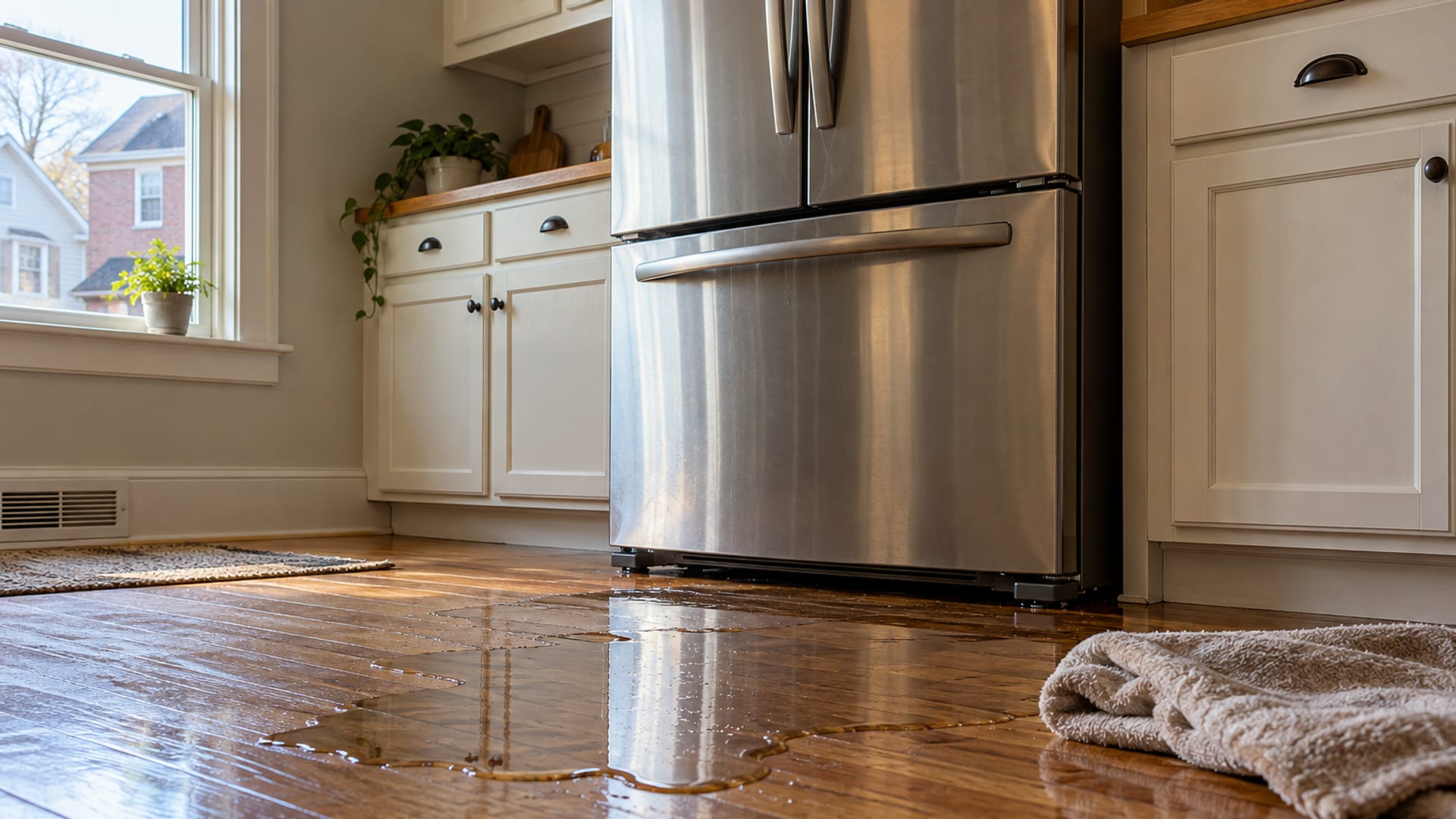
A puddle in front of the refrigerator is one of the most common calls Lauren takes, and it's rarely the disaster people fear. Most refrigerator leaks come down to one of six causes, and the spot where the water shows up usually points straight at the culprit. Here's how Joey narrows it down on a Huntington kitchen floor — and what you can check yourself before you call.
Where the Water Is Coming From Tells You a Lot
Before you pull the refrigerator out, notice where the water is. Water inside the fresh-food section, pooling under the crisper drawers, points to the defrost drain. Water on the floor at the front usually means the drain pan or a gasket. Water at the back — especially if the floor behind the unit is wet — is almost always the supply line or the inlet valve. Water only near the ice dispenser points to the fill tube. Take a look before you start moving things and you'll save yourself and us time.
A Clogged Defrost Drain Is the Most Common Cause
Every frost-free refrigerator melts the ice off its evaporator coil a few times a day. That meltwater runs down a small drain tube into a pan under the unit, where the compressor's heat evaporates it. When food crumbs or a bit of ice plug that tube, the water backs up, freezes into a sheet under the freezer floor, and eventually escapes into the fresh-food section. You'll see it puddle under the drawers or drip from the freezer.
- The sign: water or a sheet of ice under the freezer floor panel, or pooling in the crisper drawers.
- The fix: clear the drain with warm water and a turkey baster, then verify the tube runs clear to the pan. On some GE and Whirlpool models a small drain heater or a rubber duckbill at the tube's end is the real blockage and needs to be replaced.
A Cracked or Overflowing Drain Pan
The pan under the refrigerator is plastic, and after fifteen years it can crack or warp. Some models also let the pan slip out of position when the refrigerator is pulled forward for cleaning. If the pan can't hold the meltwater, it ends up on your floor at the front of the unit. A pan can also overflow when the condenser fan that helps evaporate the water has stopped running — so a leak here sometimes points to a fan problem instead of the pan itself.
Water Line and Inlet Valve Leaks Behind the Fridge
Refrigerators with a water dispenser or ice maker have a supply line running to a solenoid valve at the back. Plastic lines get brittle, compression fittings loosen when the unit is moved, and the valve body itself can crack and weep. This is the leak that does real damage because it runs constantly, not just during defrost. In older Huntington homes with hardwood floors — plenty of them in Southside and around Ritter Park — a slow valve drip can buckle a floor before anyone notices.
Check this first if the floor behind the fridge is wet. Turn the saddle valve or the shutoff under the sink to off, dry the area, and see if the puddle comes back. If it stays dry, the problem is the supply line or the inlet valve, and that's a straightforward part to replace on a refrigerator repair visit.
A Frozen Ice Maker Fill Tube
The small tube that feeds water into the ice mold can freeze at its tip, especially if the inlet valve doesn't seal fully and lets a trickle through between fills. Water then overshoots the mold, freezes on the freezer floor, and works its way out the front of the freezer door. If you see icicles behind the ice bin, this is your problem. Thawing the tube helps for a while, but the valve usually needs to be replaced to stop the drip that causes it. Our ice maker repair page covers the rest of what goes wrong with these.
Door Gasket Condensation in Ohio River Valley Humidity
Summers along the Ohio River are humid, and a door gasket with a small gap lets that damp air into the cabinet constantly. It condenses on the cold walls and shelves, runs down, and pools at the bottom. The same gap makes the evaporator coil frost over faster, which overloads the defrost drain and starts the first problem all over again.
- Close the door on a dollar bill. If it slides out with no resistance, the gasket isn't sealing at that spot.
- Clean the gasket with warm soapy water — dried syrup and grime keep it from sealing.
- If the gasket is torn or hard, replacement is inexpensive and worth it.
Check That the Refrigerator Is Level
A refrigerator should sit slightly tilted back so the doors swing closed on their own and the meltwater runs toward the drain instead of away from it. Older homes with settled floors — common in Huntington's West End and in Guyandotte — leave units pitched forward. That lets water run out the front of the drain trough and the doors drift open. Adjusting the front leveling feet fixes both.
When to Call for Refrigerator Repair in Huntington
If you've cleared the drain, checked the gasket, and leveled the unit and the water keeps coming, something needs a part. The most frequent replacements we make on a leaking refrigerator are the inlet valve, the drain heater, the drain pan, and the evaporator fan motor — a failed fan lets the coil ice up and overwhelm the drain. Our evaporator fan motor replacement page explains how that one shows up. Call Lauren, tell her where the water appears, and she'll get Joey out — usually within a day or two.