

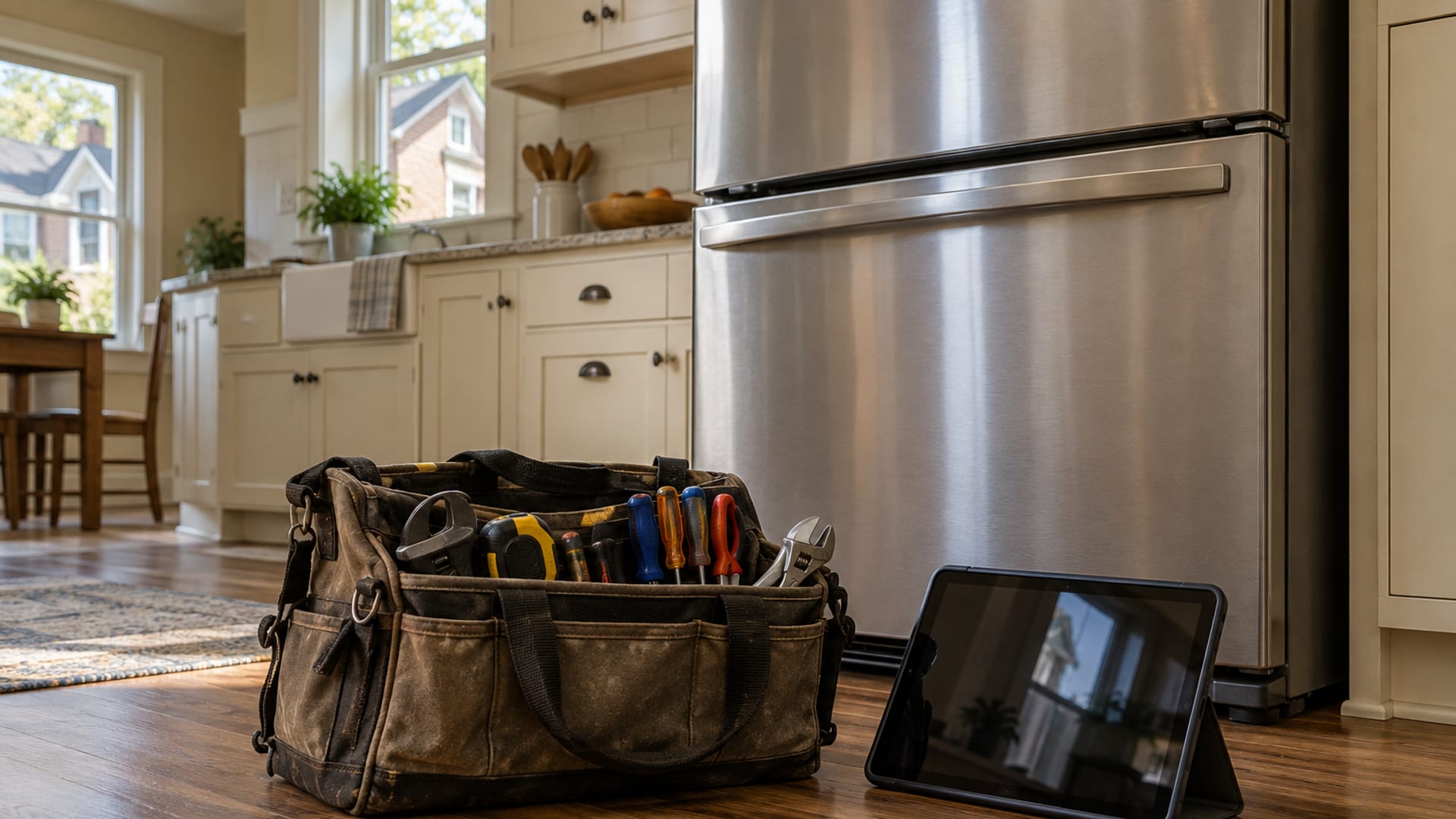
If you've never had an appliance technician out, or your last experience was a big-box service department, here's exactly how a call with Saunders Appliance Repair goes from the first phone call to the finished repair. No surprises — that's the whole point of writing it down.
Step One: Call Lauren and Describe the Problem
When you call (304) 894-2061, you'll get Lauren. She handles scheduling and takes down what's going on. You don't need to know what's broken — just describe what the appliance is doing or not doing. "The dryer runs but stays cold." "The fridge is warm but the freezer is fine." "The dishwasher stops mid-cycle and beeps." The more specific the symptom, the better Joey can prepare, and sometimes the right description means the fix happens on the first visit instead of the second.
What to Have Ready: Brand, Model, and Serial Number
Every appliance has a nameplate sticker with the model and serial number. Having it when you call is the single most useful thing you can do. It tells us the exact part numbers, whether a part is on the truck, and whether the machine is a known trouble model. Here's where to find them:
- Refrigerator: inside the fresh-food compartment, on the side wall or ceiling near the top.
- Washer: under the lid on a top-loader; inside the door rim on a front-loader.
- Dryer: inside the door opening, on the frame.
- Dishwasher: on the edge of the door or the inside of the door panel.
- Oven or range: inside the drawer, on the frame under the door, or behind the door.
- Microwave: inside the door or on the back.
Snap a photo with your phone. Lauren can take the numbers over the phone or you can text them.
How Scheduling Works — Usually 24 to 48 Hours Out
Joey runs the calls himself, so scheduling is one truck's route across the Tri-State. Most Huntington, Barboursville, and Ashland calls are scheduled within a day or two of your call. Charleston, Ironton, and the Kentucky side are grouped so the drive makes sense. Cincinnati, Columbus, and Lexington are by appointment — usually luxury built-ins where it makes sense to come that far. Lauren will give you a window, and Joey calls when he's on the way.
How to Prep the Space Before Joey Arrives
A little prep makes the visit faster:
- Clear a path to the appliance and enough room to pull it out from the wall.
- Empty the dryer, washer, or dishwasher. For a refrigerator, move food off the freezer floor or the shelf nearest the problem if you know where it is.
- Know where the water shutoff is for a washer, dishwasher, or fridge with a water line.
- Keep pets in another room. Joey likes dogs; dogs like open refrigerators.
- If the appliance throws an error code, write it down before you reset it.
Diagnosis Happens on Site, Not over the Phone
The first thing Joey does is test, not guess. He'll run the appliance, listen to it, meter the suspect parts, and find the actual failure. A dryer with no heat could be one of five parts; a warm refrigerator could be a fan, a defrost system, or the sealed system. Guessing from the symptom over the phone leads to the wrong part on the truck, and that costs everyone a return trip. Once he knows, he'll explain what failed in plain English and what it will take to fix it. You decide from there.
Ask questions. If you want to see the failed part, ask. If you want to know whether the rest of the machine looks healthy, ask. Joey would rather spend five minutes explaining than have you wonder afterward whether the repair was necessary.
If a Part Has to Be Ordered
Joey carries the common parts for the brands we see most — elements, fuses, thermostats, pumps, valves, igniters, fan motors. When the repair calls for something model-specific, he orders it from the parts supplier the same day. Ordered parts generally arrive in three to five business days. Lauren will call you when it's in and get the return visit scheduled. If a part is backordered or discontinued, you'll hear that right away rather than after weeks of waiting. Our specialized parts replacement page explains how we handle the harder-to-find items.
The Return Visit and the Finished Repair
The second visit is usually quick — the diagnosis is done, the part is in hand, and Joey knows exactly where he's going. He installs it, runs a full cycle to confirm the fix, and puts everything back where it was. Parts are installed to the manufacturer's standard even on older units; nothing gets rigged to limp along. If something else looks close to failing while he's in there, he'll mention it so you can plan.
You'll Get an Honest Repair-or-Replace Answer
Sometimes the honest answer is that the machine isn't worth fixing. A failed compressor on a fifteen-year-old builder-grade refrigerator, a cracked outer tub on a front-loader, a discontinued board on an old range. When that's the case, Joey says so, and more than one customer has left a review specifically because he told them to buy new instead of paying him. The decision is always yours, but you'll make it with a real diagnosis in front of you. Our repair-or-replace guide walks through how we think about it.
That's the whole process. Call, describe the problem, have the model number handy, clear a path, and let Joey do the testing. For a general once-over rather than a specific breakdown, see our appliance repair and maintenance page.